
How do resurfacing lasers build new collagen?
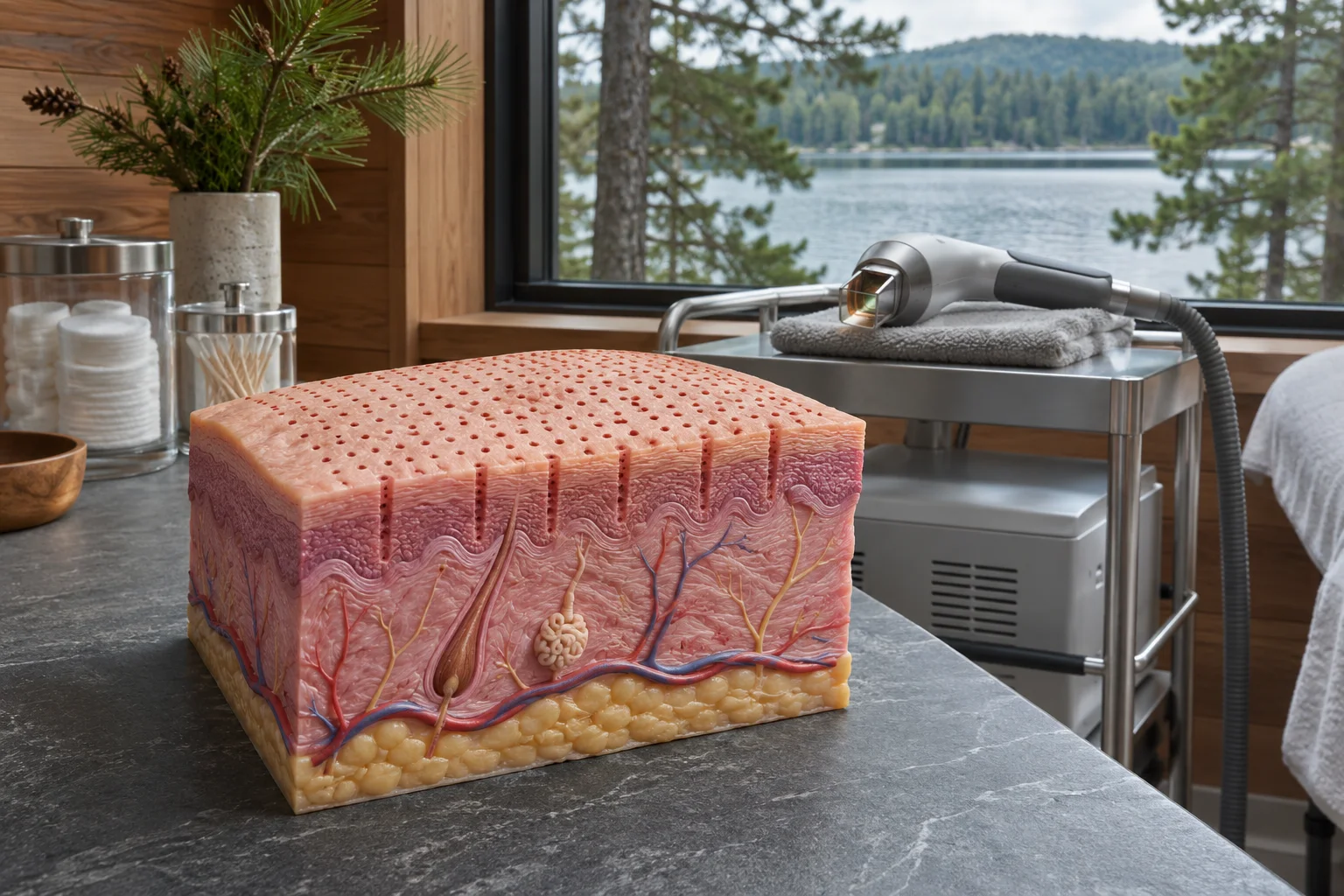
A tidy explanation of how lasers build collagen makes the procedure sound like something you can judge from the outside. You can follow the idea, but you cannot judge your own treatment from it.
The one-sentence mechanism
my.clevelandclinic.org states that the lasers stimulate the growth of new collagen fibers, resulting in new skin that is smoother and firmer. It is an account of what the treatment is meant to do.
What the sentence does not tell you
It does not say how much collagen forms, how fast, or for whom, and a reader should not fill those gaps with guesses. The result you get depends on a plan someone made for your skin, so the number of sessions and the device are questions for your provider.
The point where caution takes over
Understanding the idea is something you can do alone. Choosing settings, depth or a device for your face is not. Ask a provider to explain, in plain terms, what they intend to do on your skin and why.
More background
The Aesthetic Society's laser skin resurfacing page and WebMD's guide to benefits, side effects and average cost describe the procedure more broadly. One page covers how dermatologists treat sun-damaged skin, and another lists wrinkle treatments from retinol to fillers.
A clear mechanism is not a match
Do not treat a good explanation of the mechanism as proof that a particular laser or provider is right for you.